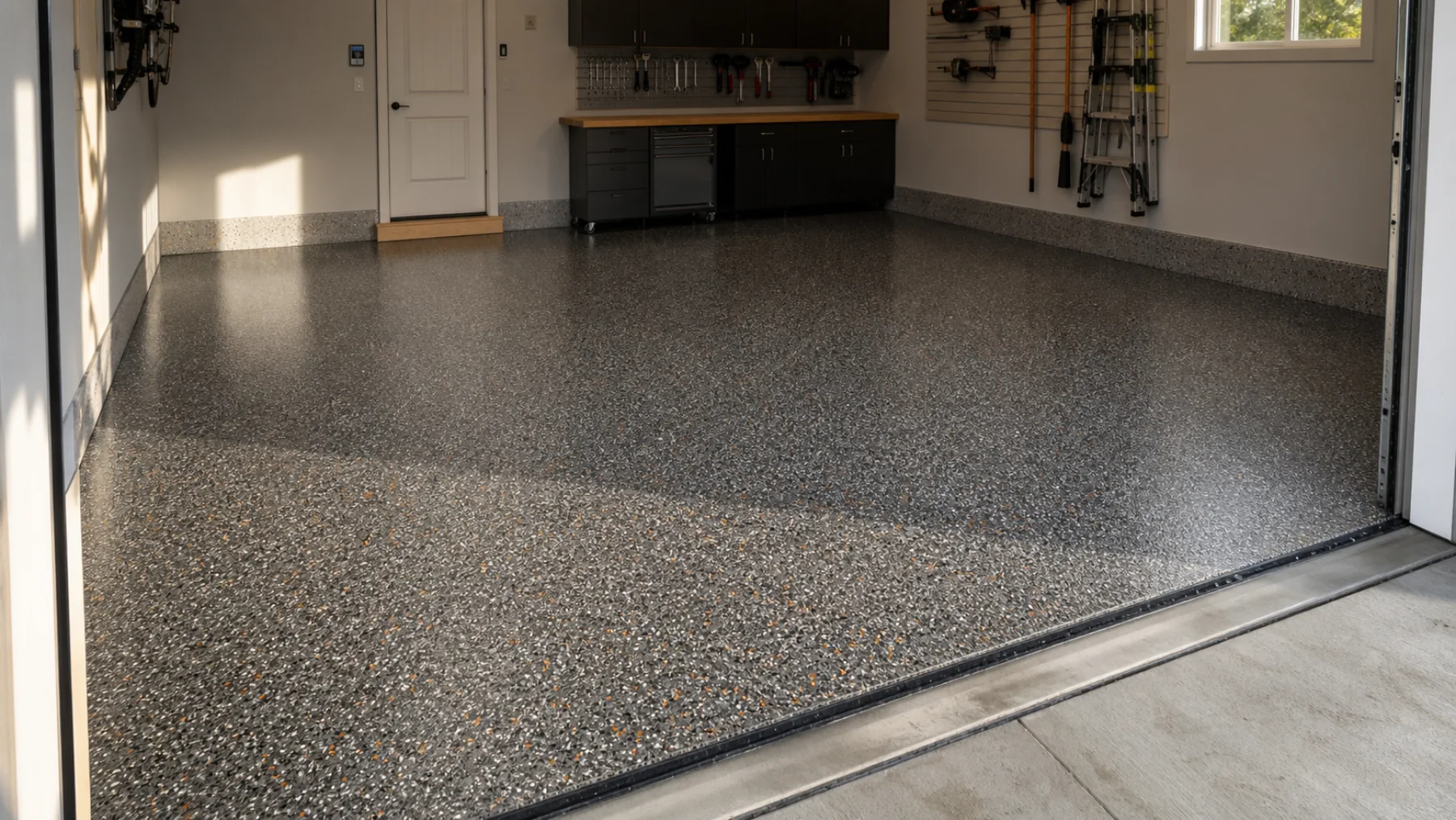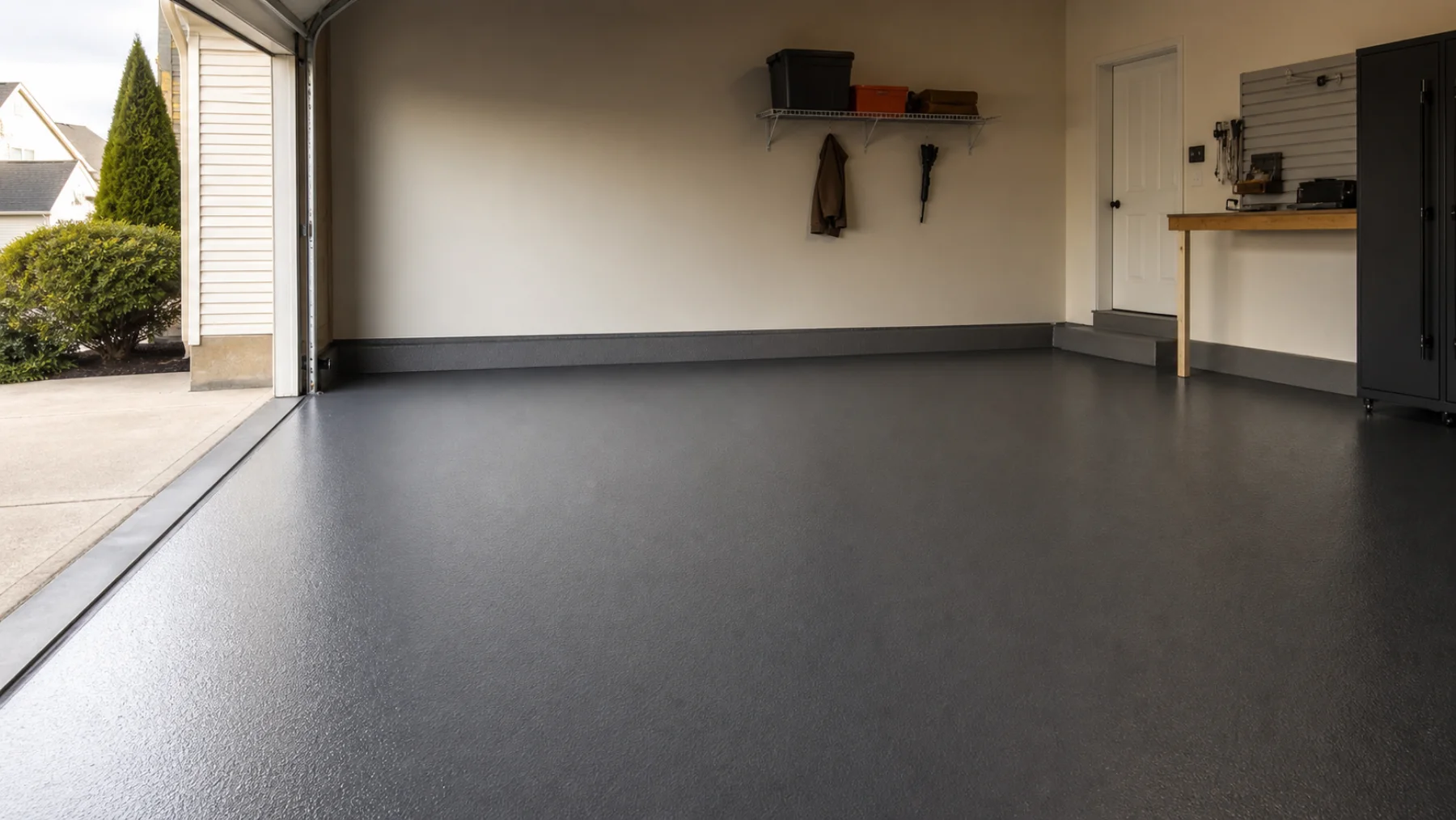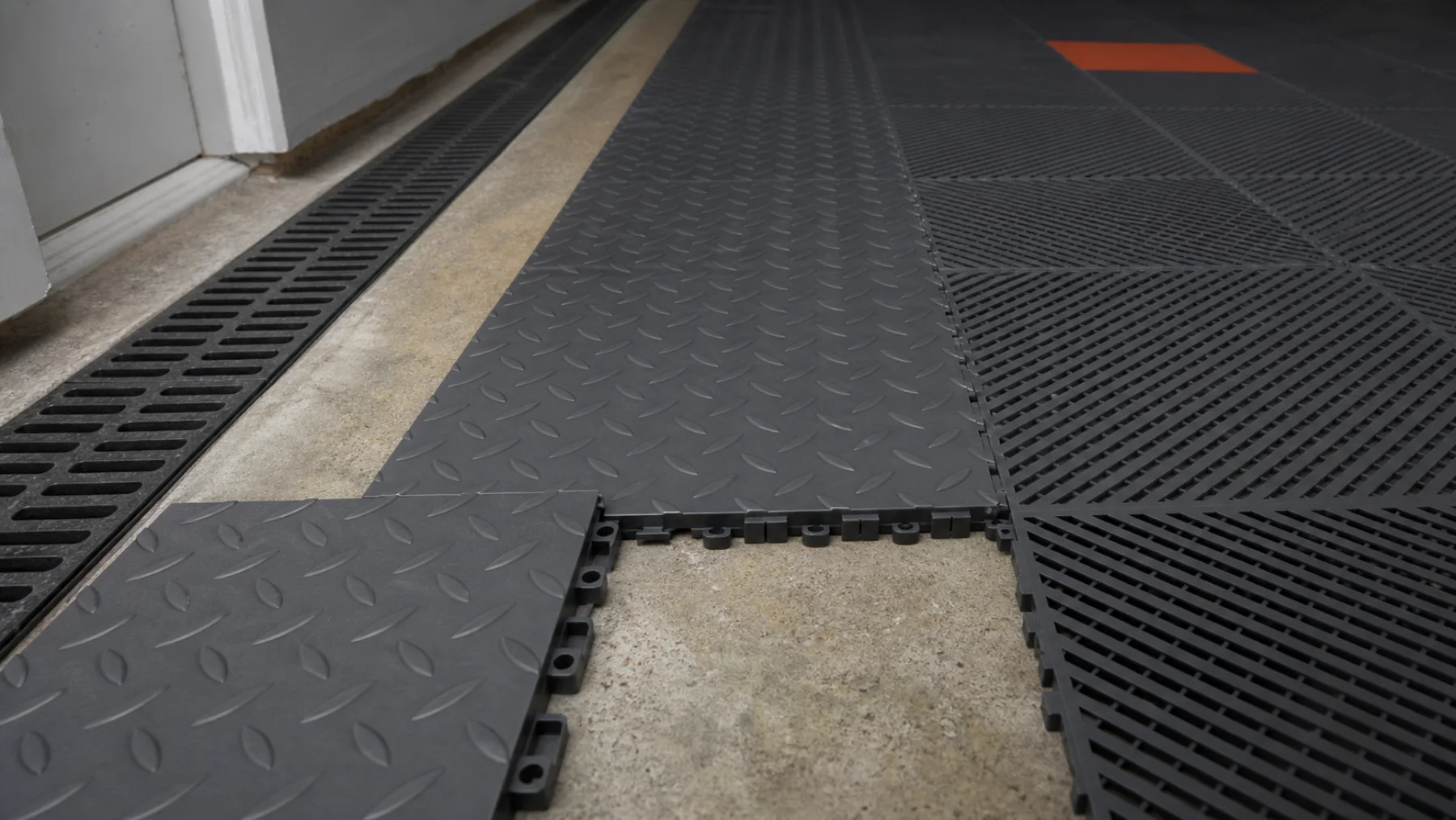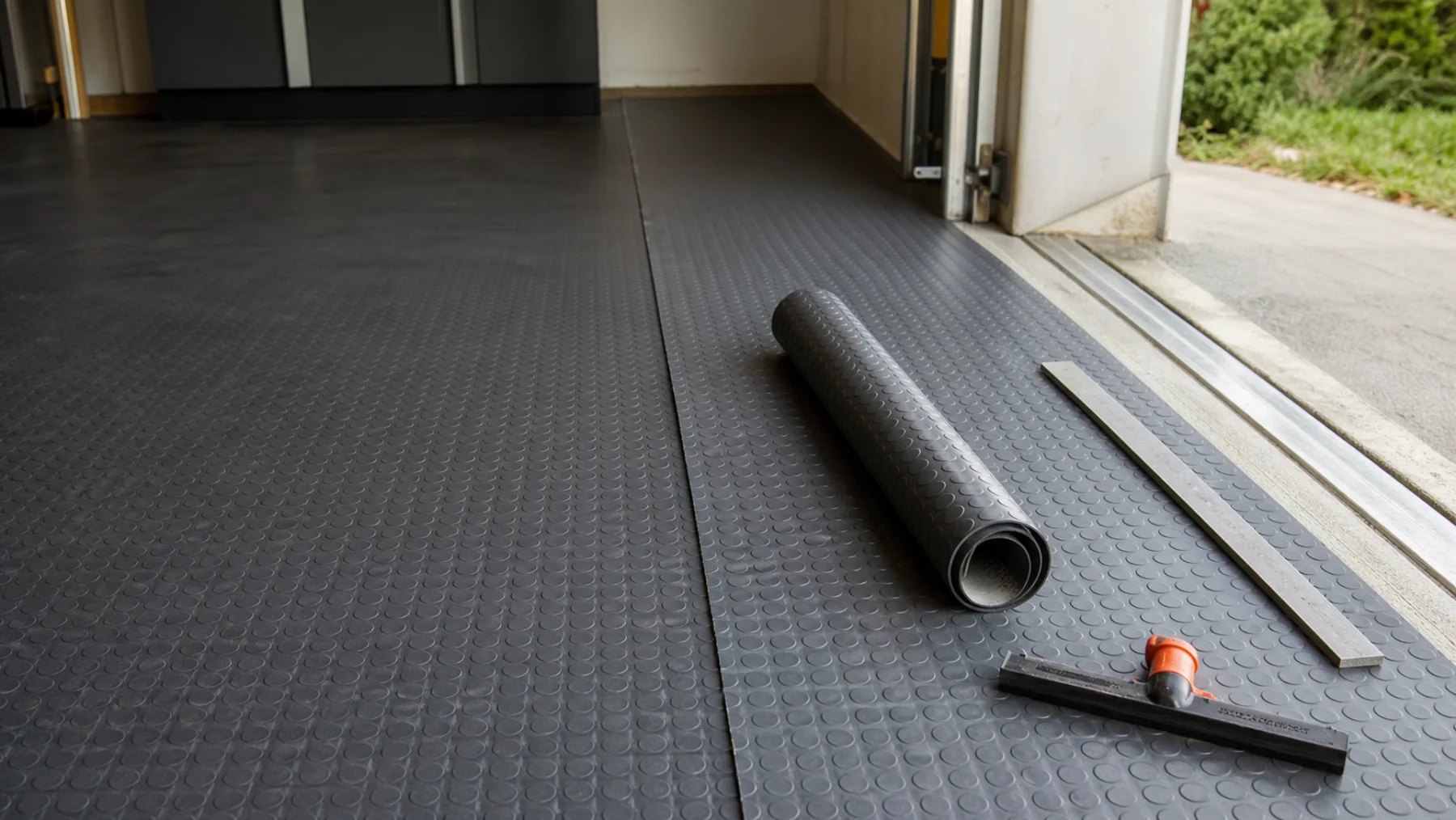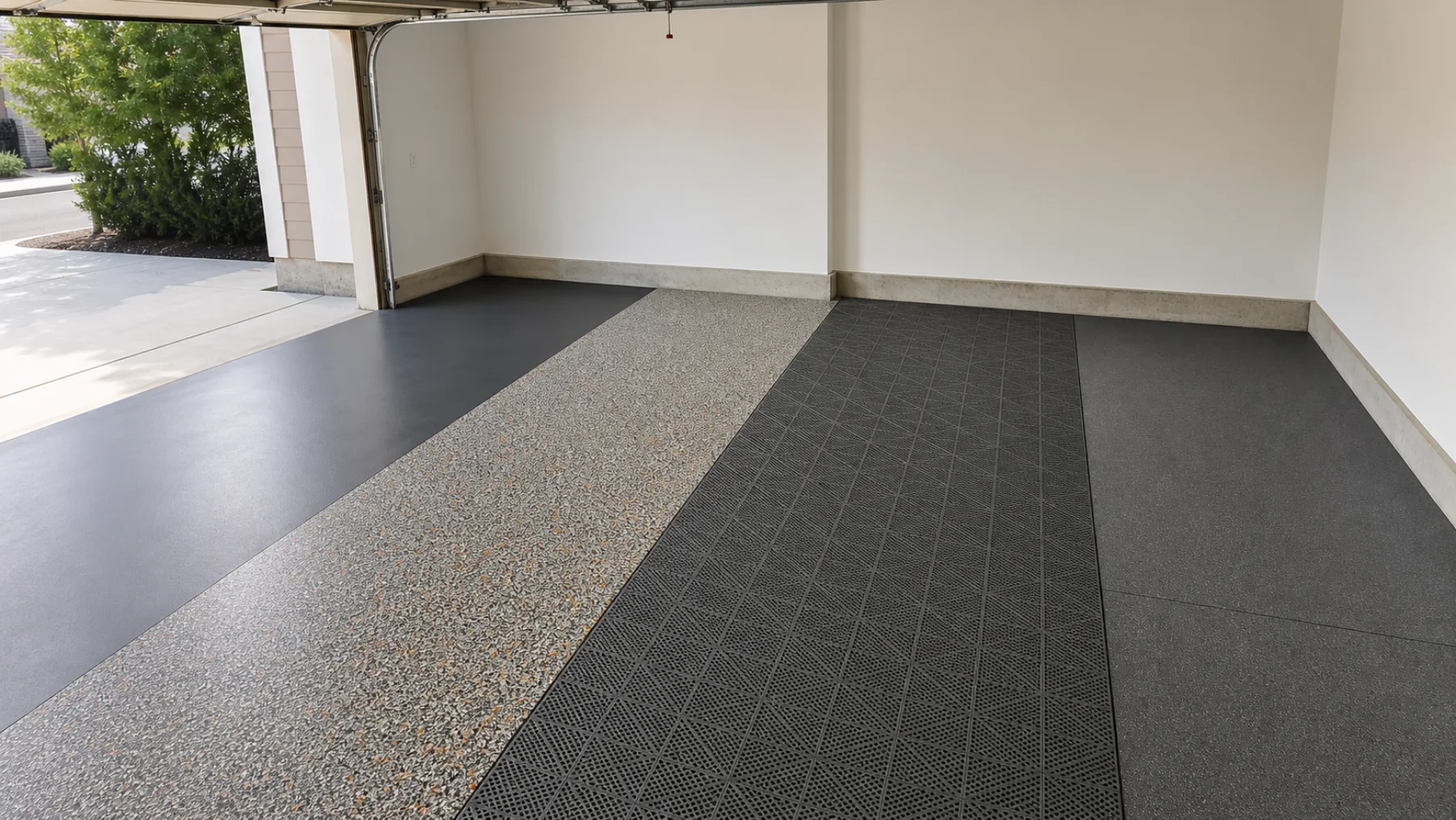
There is no universal best coating. Dry, sound slabs and patient DIYers often fit a multi-layer epoxy system; fast-turn or sun-exposed floors favor a UV-stable fast-cure system; moisture uncertainty can make vented tile the rational choice.
- 01MoistureTest or stop
- 02MovementDiagnose cracks
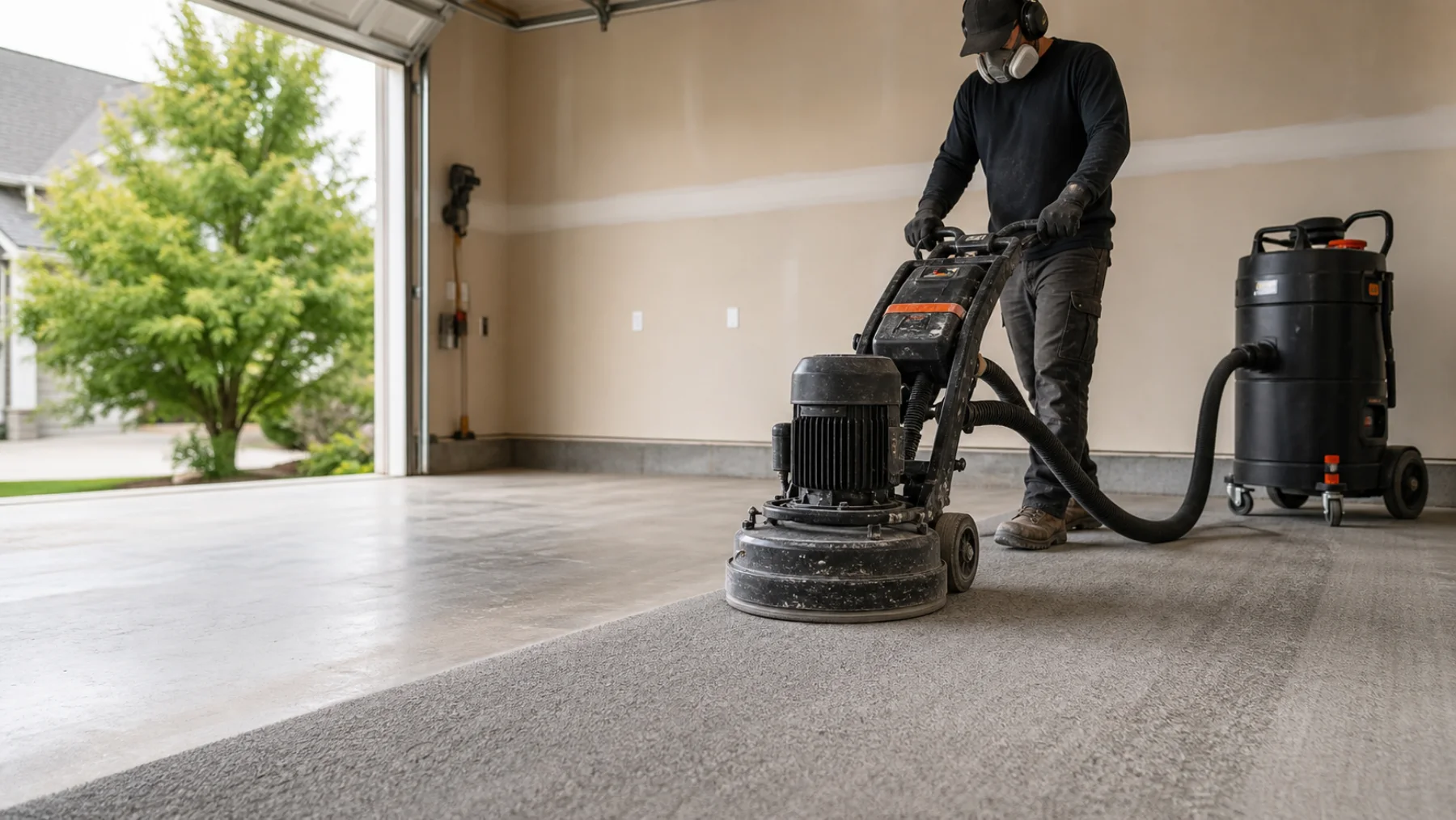
- 03ContaminationRemove to sound concrete
- 04ProfileMatch the exact system
- 05ChemistryChoose last
Start with the failure mode
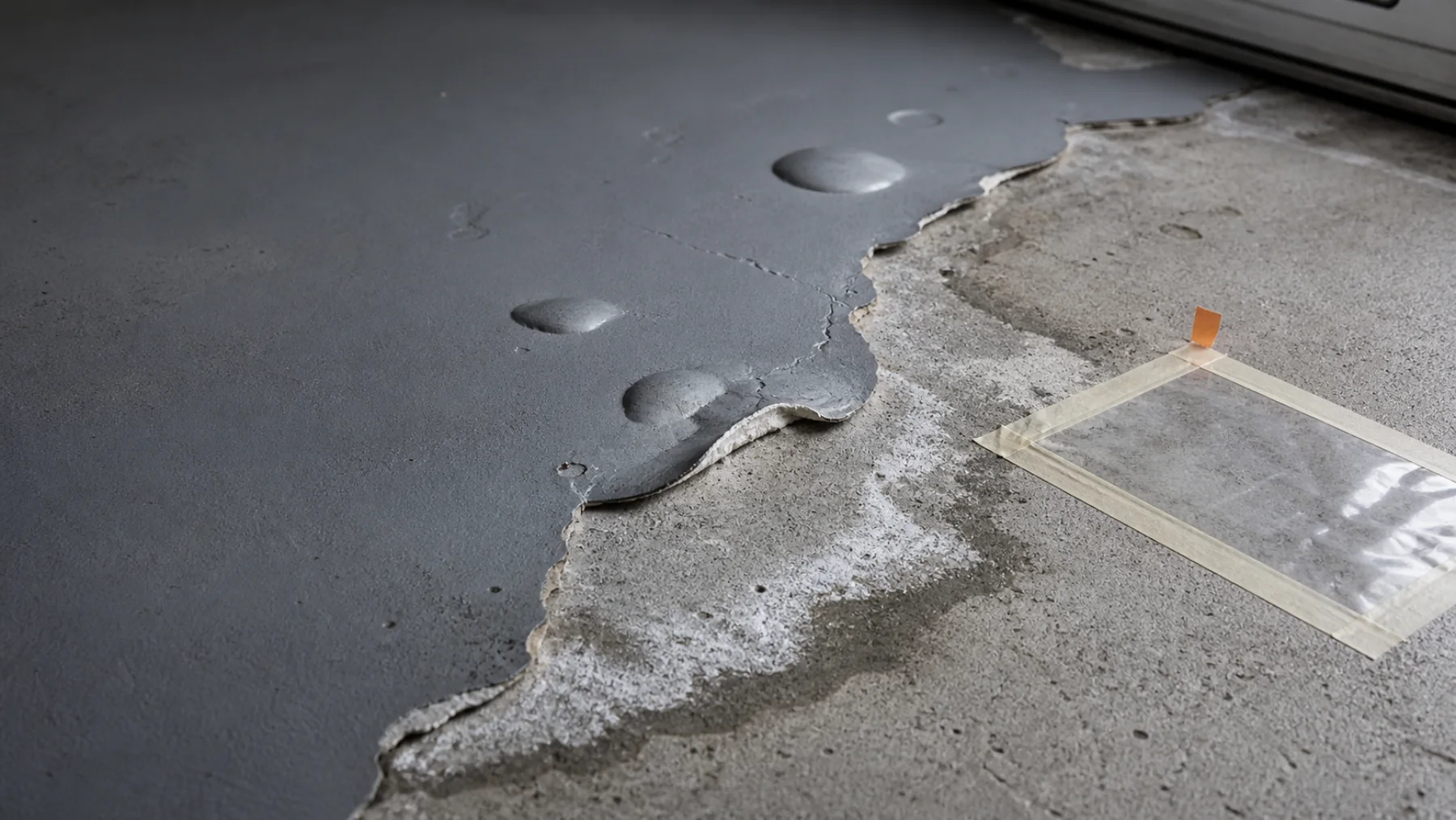
Most buying guides begin with finish and price. That is backwards. A garage floor fails first at the bond line: moisture vapor, oil contamination, weak concrete, or inadequate profile can defeat an expensive coating. Diagnose the slab before choosing chemistry.
A coating is a system, not a bucket. Primer, basecoat, broadcast media, and topcoat each solve a different problem. A cheap one-coat product and a full-broadcast system should not be compared as if they deliver the same film build.
- Unknown moisture: test before coating.
- Direct sunlight: verify the topcoat’s UV claims.
- Hot tires and chemicals: compare the full cured system.
- Limited downtime: account for both coat windows and vehicle return.
Where each system wins
Epoxy provides value and build thickness when preparation is strong and cure time is available. Polyaspartic can compress the schedule and improve UV stability, but shorter pot life makes the application less forgiving. Interlocking tile avoids chemical bonding and can bridge ugly concrete. Roll-out vinyl is the simplest protective surface but needs careful seam and edge planning.
The right choice is the one whose weaknesses match conditions you can control. A “premium” chemistry applied over damp or contaminated concrete is not premium performance.
Our decision rule
Use the selector to narrow the system, then verify the exact technical data sheet. We label untested products as spec-based and do not convert manufacturer claims into hands-on conclusions. Until a system is sample- or field-tested, the recommendation remains conditional.