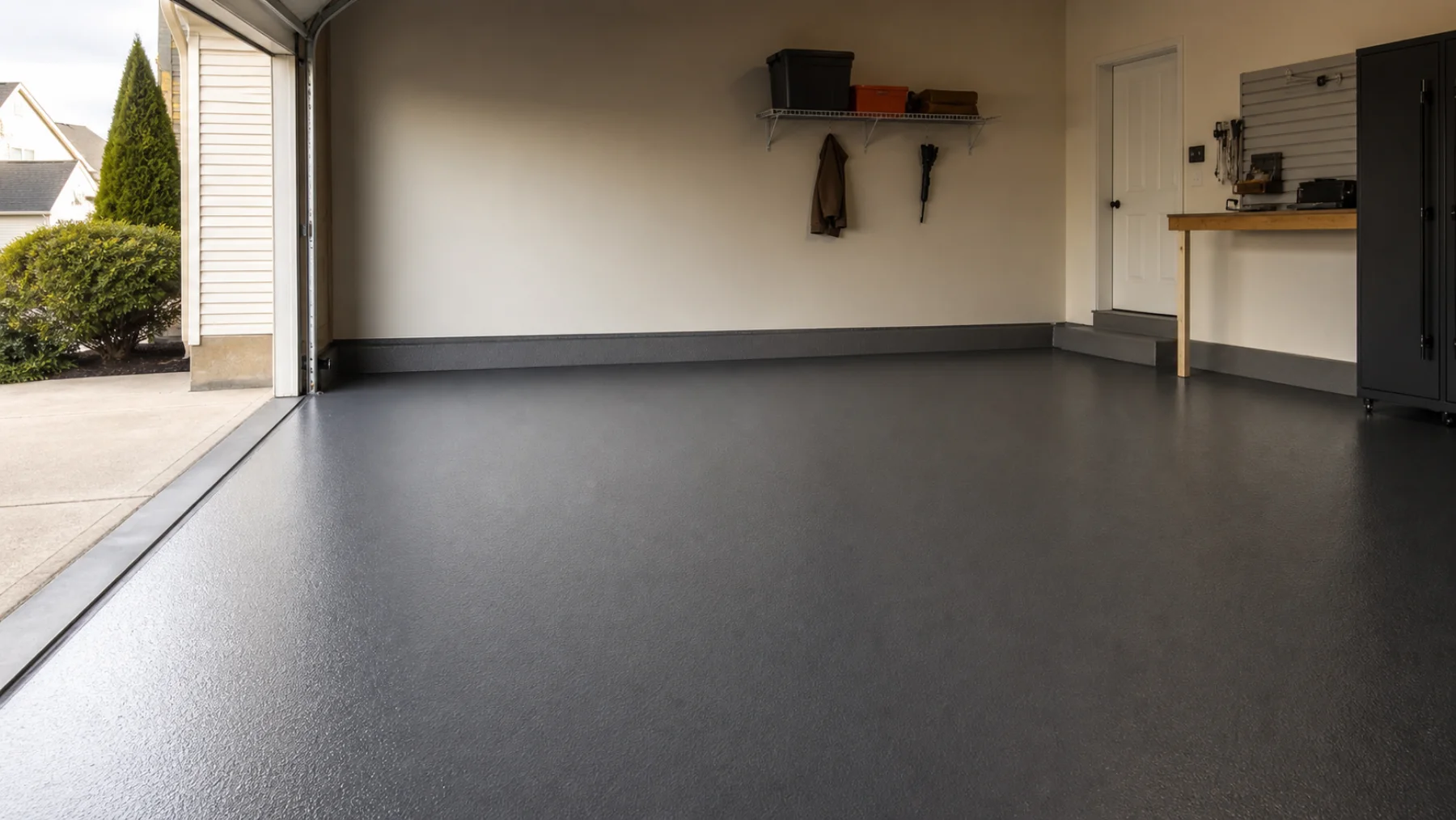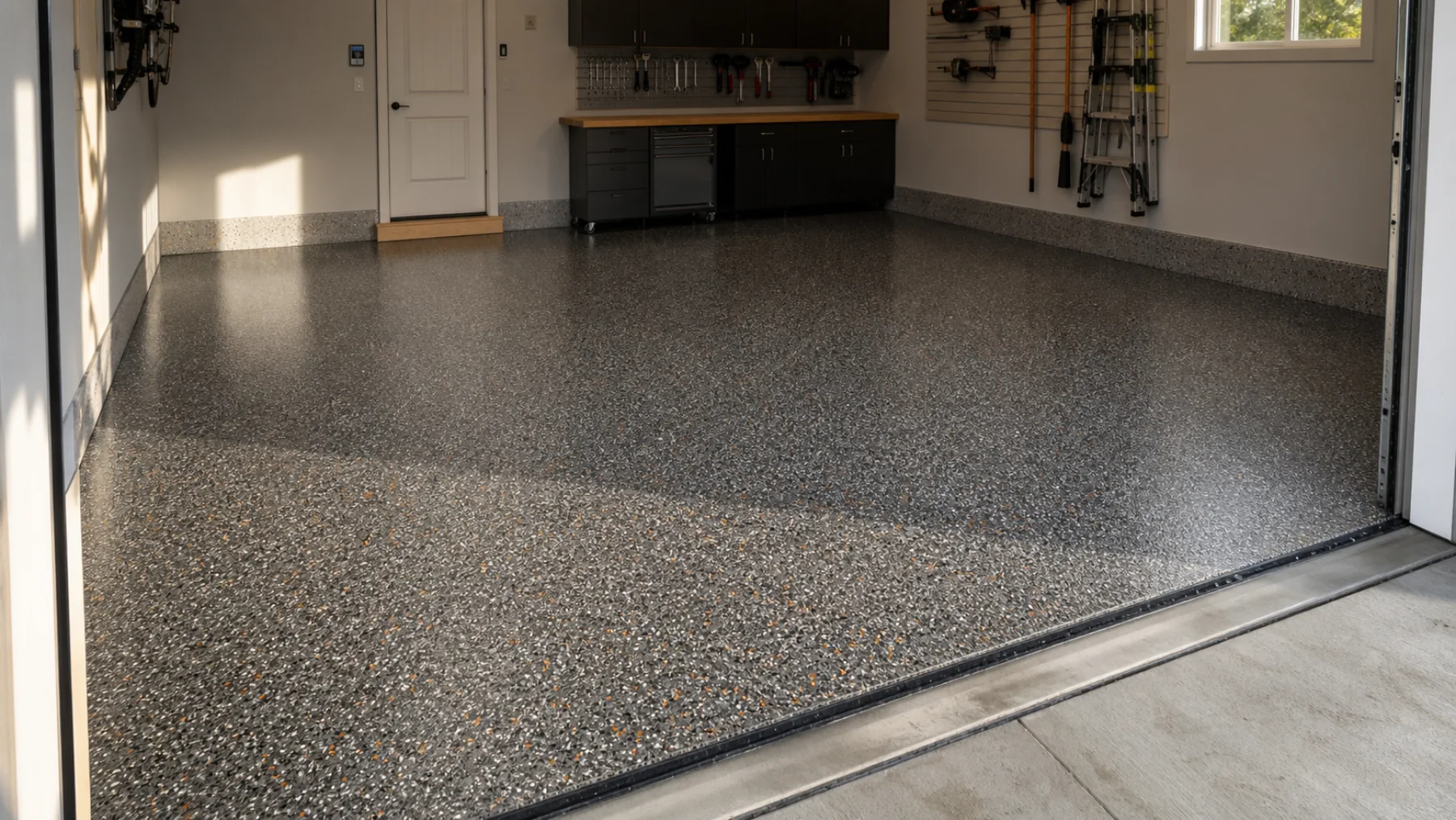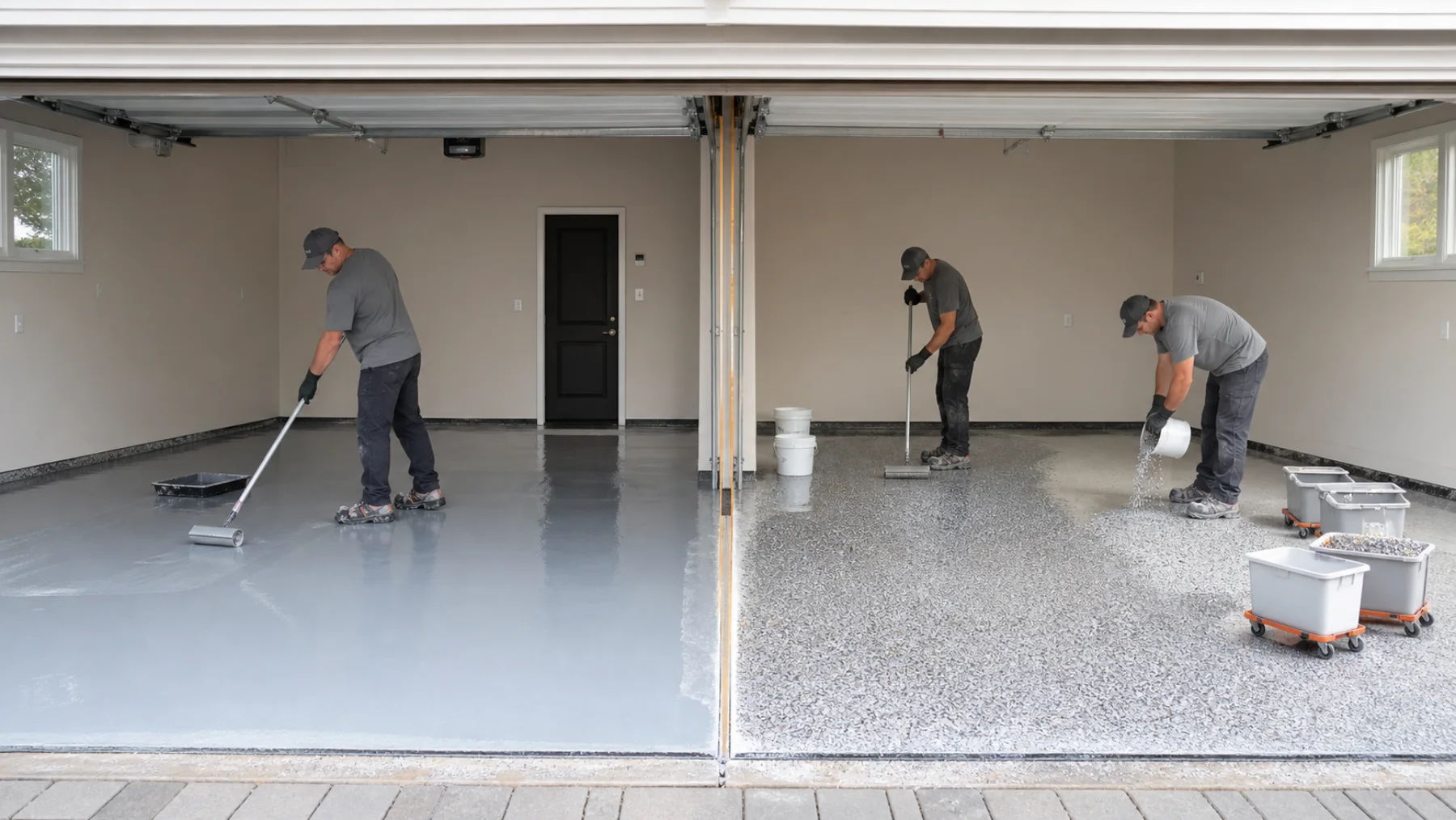
Epoxy is generally slower and more forgiving; polyaspartic is generally faster and more UV-stable. The winning system depends on the exact primer/base/topcoat stack and installer constraints.
- 00StageTools + roles
- 01MixSmall controlled batch
- 02SpreadMaintain wet edge
- 03BroadcastBefore the window closes
- 04RecoatHit the specified window
Do not compare chemistry names alone
Many marketed floors mix chemistries: an epoxy primer, polyurea base, and polyaspartic clear. Others use epoxy from primer through base with a urethane or polyaspartic topcoat. Compare each layer’s job instead of forcing the system into a single label.
Solids content, applied thickness, recoat window, substrate tolerance, and cure conditions are exact-product variables.
The practical trade
Longer working time can make epoxy easier for a careful DIY installer, while the longer cure schedule keeps the garage unavailable. Polyaspartic allows rapid recoating and vehicle return but punishes slow application. UV-exposed areas often favor a verified UV-stable top layer.
Cost must include labor and failure risk. A faster material may reduce installed labor while costing more per gallon.
Decision matrix
Choose based on slab moisture, sunlight, available helpers, temperature control, desired film build, and downtime. If those inputs are unknown, a brand comparison is premature. Run the system selector first.