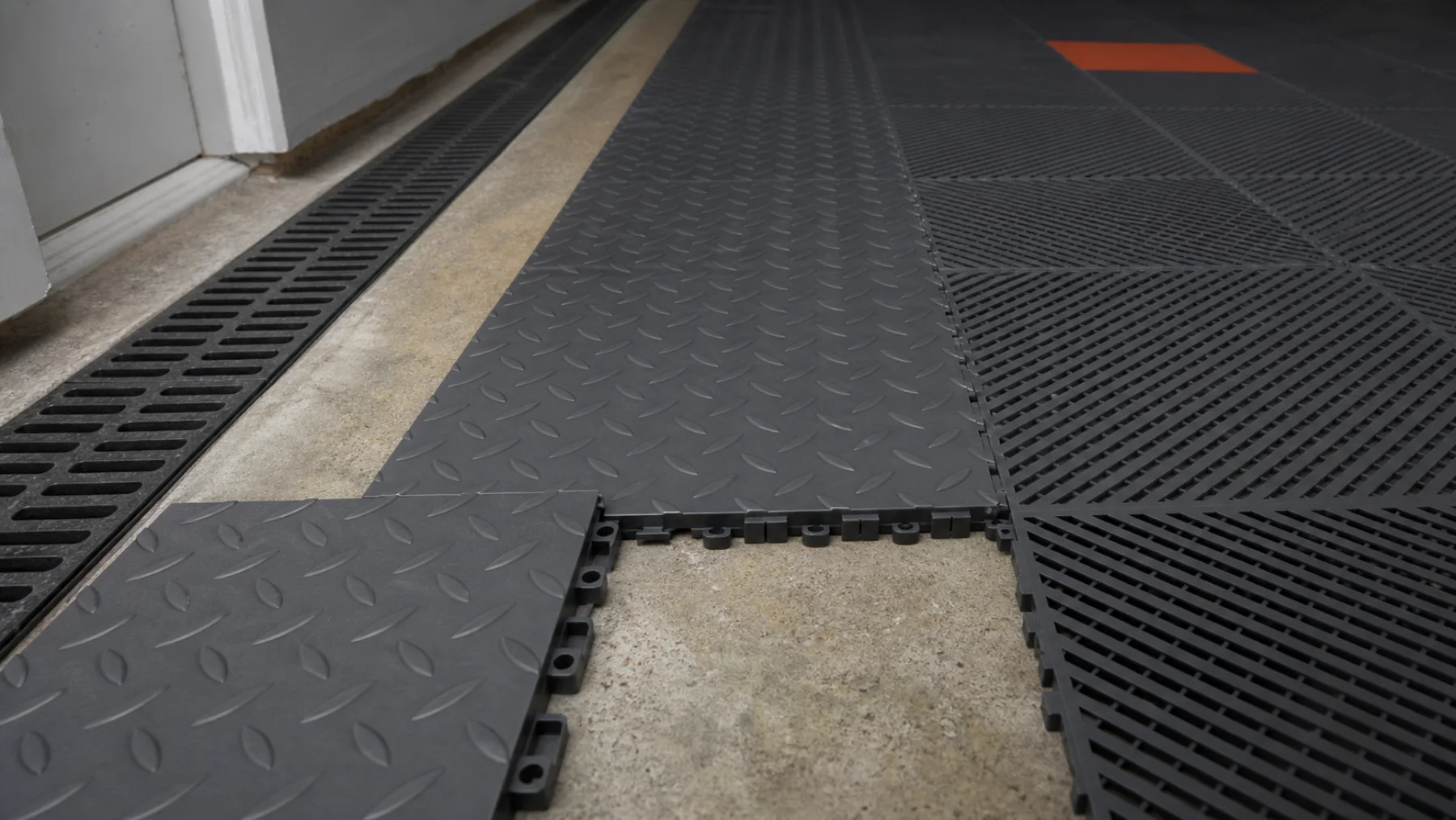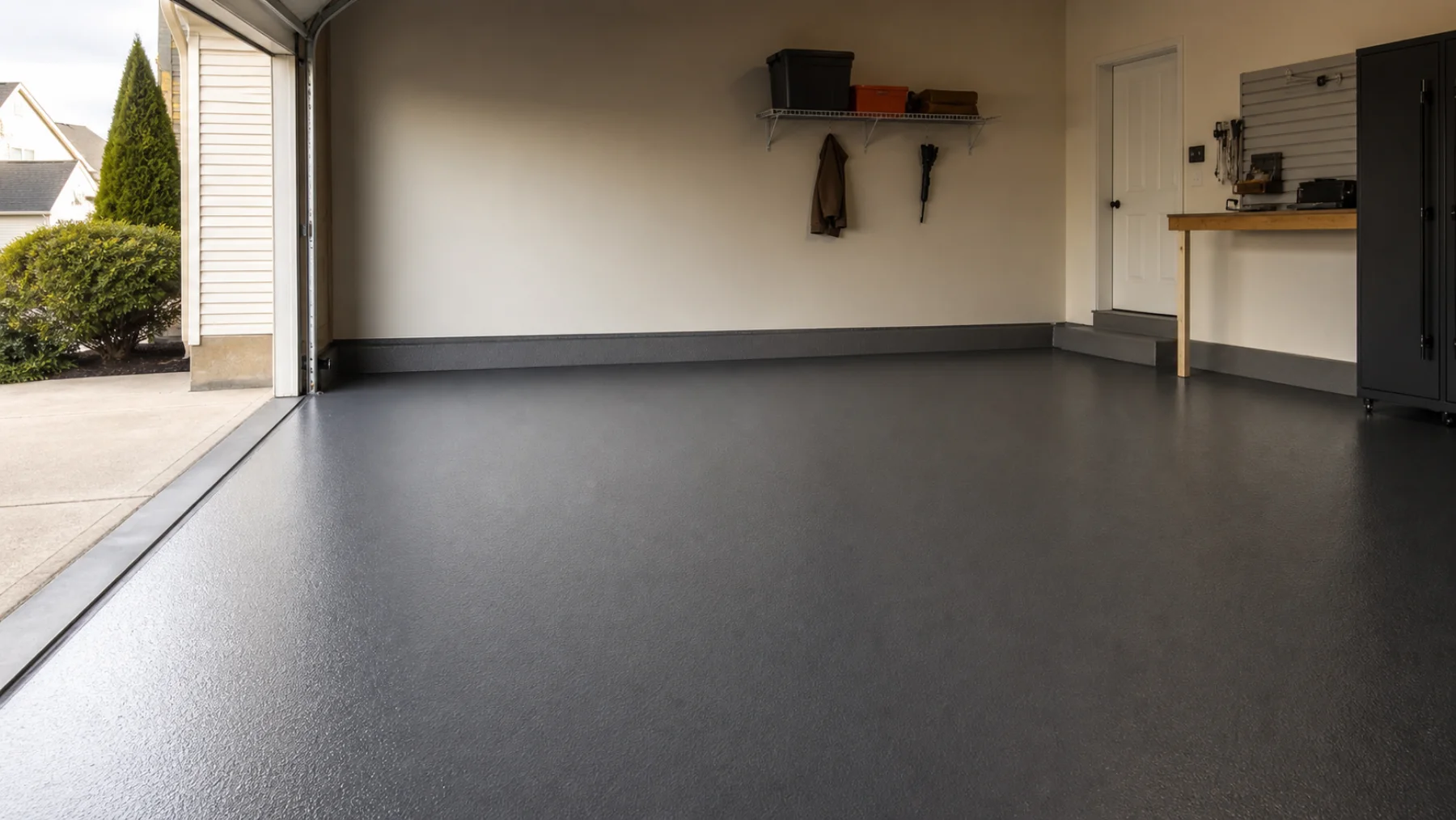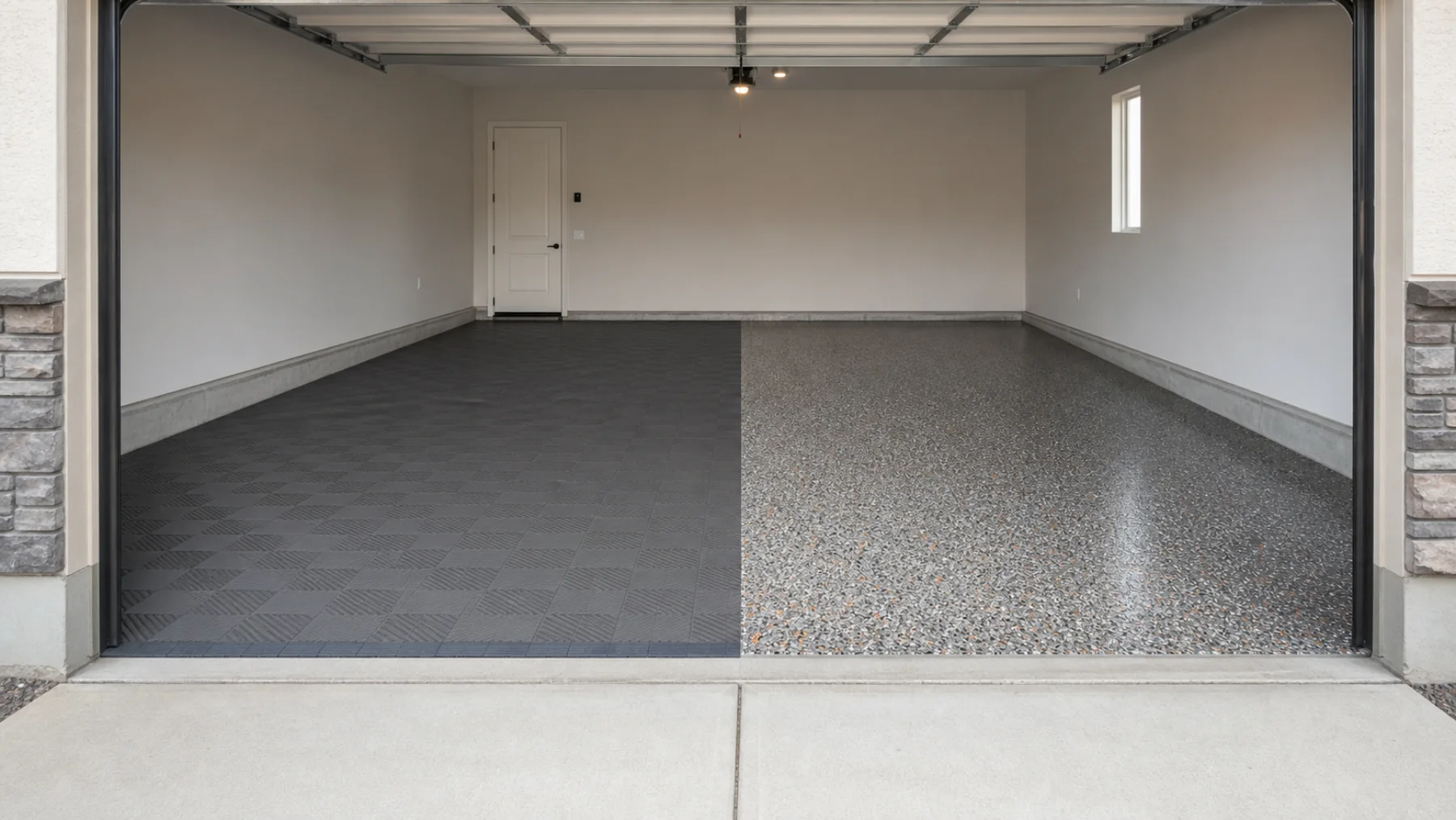
Tile wins on speed, reversibility, and tolerance of ugly concrete. Epoxy wins on a seamless bonded surface when the slab and preparation support it.
The commitment difference
Epoxy becomes part of the slab surface. Removing a failed system is labor-intensive. Tile is mechanically assembled and can be lifted, reconfigured, or replaced. That reversibility has value when the building, moisture, or future use is uncertain.
A bonded surface gives a seamless look and straightforward top cleaning. Tile introduces joints, perimeter details, and a cavity below the walking surface.
Prep versus layout
Epoxy success depends on substrate diagnosis, cleaning, profiling, repair, and exact coating windows. Tile success depends on flatness, layout, expansion spacing, cuts, transitions, and matching the profile to water and caster use.
Neither option erases major slab movement. Tile may bridge cosmetic damage, but displacement can still create rocking or uneven sections.
Choose by constraints
Choose epoxy when the slab is dry and sound, a seamless finish matters, and the installation can be controlled. Choose tile when downtime is short, the floor is cosmetically poor, moisture is uncertain, or reversibility matters. Use samples and a total installed cost rather than comparing a tile price to one bucket of resin.