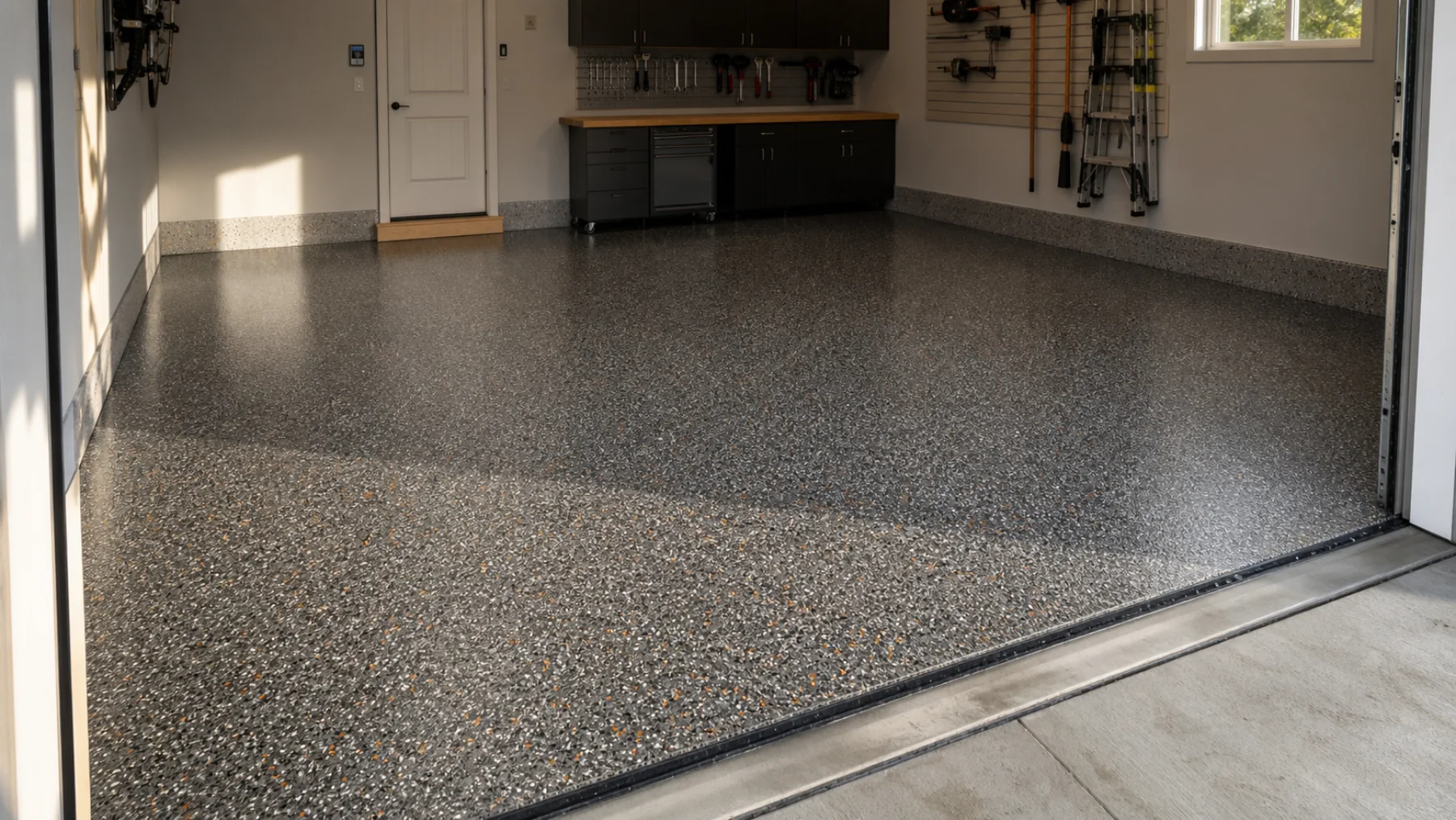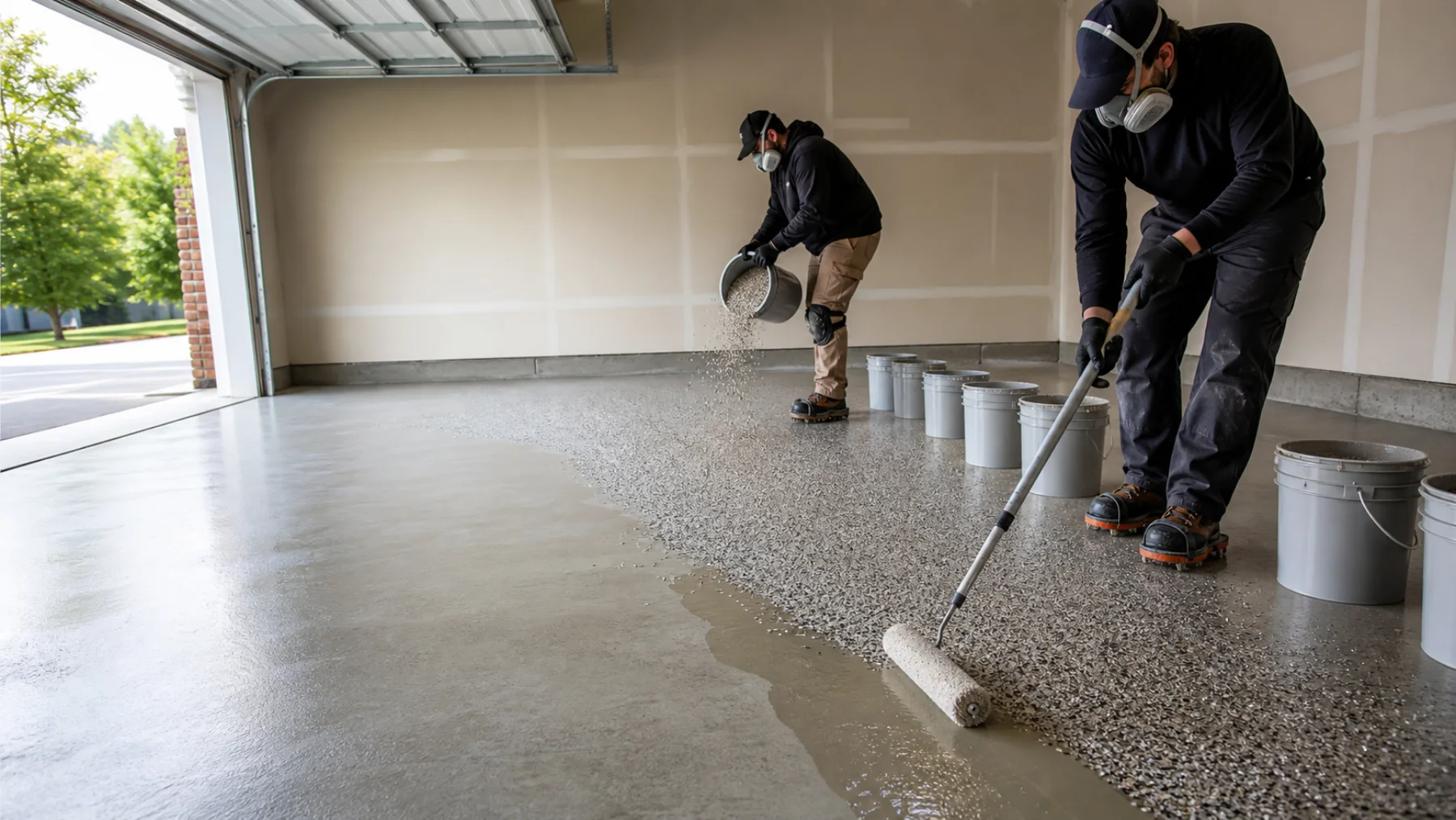
Polyaspartic is strongest when fast return-to-service and UV stability matter, but its short working time makes preparation, crew size, batch control, and temperature more—not less—important.
- 00StageTools + roles
- 01MixSmall controlled batch
- 02SpreadMaintain wet edge
- 03BroadcastBefore the window closes
- 04RecoatHit the specified window
What fast cure changes
Fast cure compresses the interval between coats and can return the garage to service sooner. It also shortens the time available to mix, cut edges, spread material, broadcast flake, and correct mistakes. A one-day system is a logistics system.
Temperature and batch size change working time. The exact technical data sheet, not the generic word polyaspartic, controls the install.
UV claims belong to the topcoat
Sunlight reaches garage thresholds and open-door areas. Epoxy can amber, while many aliphatic polyaspartic topcoats are sold for UV stability. Verify the exact topcoat and its exterior limitations instead of assuming every fast-cure component has the same behavior.
A UV-stable clear does not repair an unstable slab, moisture problem, or poor profile. Chemistry cannot compensate for preparation.
DIY or contractor?
A small floor, controlled temperature, experienced helpers, staged tools, and rehearsed batching can make DIY plausible. A large floor, solo installer, complex edges, or uncertain concrete pushes the project into professional territory. Use the difficulty grader before the product selector.